For 20 years—from Bazley Commission in 2007 to Public Service Commission (PSC) in 2026—independent reviews have told same story: police culture where loyalty to colleagues trumps loyalty to integrity, where speaking up ends careers & where senior officers are held to a lower standard than those they command. The words change – the findings do not! Police have made progress in patches, but underlying cultural rot persists! 2026 PSC review was brutally clear: this is not about a few bad apples – it is a systemic failure.
(Appreciate you sharing & signing my “Independent Commission of Inquiry into Tribal NZ Police Culture is Warranted” petition. Thanks in anticipation 🙂 )
Police culture was critically examined by 2007 Commission of Inquiry into Police Conduct (covered the period from 1979 to 2005) led by Dame Margaret Bazley.
“It is clear certain elements of police culture have adversely affected Police’s ability to effectively & impartially investigate complaints against police members. Officers are more loyal to their colleagues than to the organisation or to the broader public interest. So, in a situation where an officer is accused of misconduct, collegial bonding may lead to a “code of silence” in which fellow officers resist efforts to investigate allegations. The closer the work group is, the harder it is for colleagues to “tell on” each other. Loyalty, if developed to excess, can lead to blind allegiance & potential for engaging in ‘cover-ups’.
I am concerned the police impetus for change may not be sustained once the Commission of Inquiry into Police Conduct is discharged. For this reason, I believe it is very important an independent agency with the appropriate authority be tasked with monitoring & reporting on the implementation of my recommendations as adopted by Government, and also with the progress on the police projects & initiatives. Many of the projects the police have embarked on will involve making long-term changes to culture. They are not changes that can be implemented in a short period of time. Independent monitoring of & reporting on police progress in making these changes will, in my view, be critical to ensure the momentum established through this Commission is sustained”.
IPCA’s Bullying, Culture & Related Issues in Police 2021 report confirms Coster (& de Wattignar) did not made essential culture improvements in 3.5+ years!
Interviewees overwhelmingly painted a bleak picture of culture, which was commonly seen as an autocratic culture based on diversity of thought intolerance.
• A significant number of those in managerial positions have little emotional intelligence & few managerial or people skills (ABSOLUTELY)
• Organisation lacks empathy & caring (DEFINITELY)
* Although the values embodied in the Code of Conduct (professionalism, respect, integrity & empathy) are to be applauded, the consistent message we received is they were not seen as being modelled by the organization – particularly at a senior level (MASSIVELY – IN MY 5 YEARS EXPERIENCE, I COULDN’T FIND EVEN 1 PNHQ CONSTABULARY WHO CONDUCTED THEMSELVES ACCORDING TO THOSE SUPPOSED VALUES!)
• Tribal culture which values loyalty over integrity (100% – “INTEGRITY” IS MERELY A WORD PNHQ CONSTABULARY KNOW NOTHING ABOUT!)
Incredibly, Coster dishonestly ‘cherry-picked’ one positive comment & reported to the media this research confirmed Police were “moving in the right direction”! As Coster effectively declared “Nothing to see here”/‘swept it under the carpet’, doubt he commenced any initiatives to address/improve the numerous cultural deficiencies.
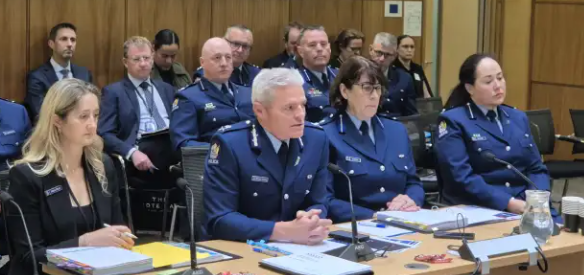
Core conclusion of IPCA’s November 2025 Review of Police handling of complaints against Jevon McSkimming report was a culture of deference, avoidance & collective failure.
“Police culture tends to produce resistance to external criticism, and intolerance & even bullying of those who internally challenge status quo. It can lead to groupthink, psychological phenomenon in which the desire for group harmony & conformity can result in dysfunctional decision-making. That, in turn, can be manifested in “Them vs Us” mentality; failure to challenge poor decisions; tolerance of unethical behaviour & tendency to overlook alternative responses to problems due to pressure to conform or fear of ostracism.
This challenge is not new. Culture highlighted here was critically examined by 2007 Commission of Inquiry into Police Conduct led by Dame Margaret Bazley. While Police have made significant advances towards a more positive culture since the Bazley inquiry, our findings graphically demonstrate the settings in place to protect & enhance integrity are still not sufficiently robust to enable the Public to have confidence Police will do their job ‘without fear or favour’. There needs to be a sustained plan of action to effect further substantial change.
Far less has been done to effectively counteract negative culture. There needs to be specific plan of action not only to emphasise the behaviours required to reflect the core values of the organisation but also to confront & challenge the culture & accompanying behaviours that undermines those values. While some progress has been made in recent years, our perception is it has stalled & much more is required. It requires action that clearly demonstrates departure from core values will not be tolerated. We suggest this is most likely to be effective if it is demonstrably driven from the top”.
Public Service Commission’s April 2026 Performance Improvement Review report painted a stark picture of a police force where a culture of “tribalism” at the top, perception of two-tier justice & systems that have failed staff have created a mission-critical integrity crisis. This is not about a few bad apples; the report points to a systemic rot where loyalty can trump merit, speaking up is risky & complaint processes are broken. The challenge for Police leadership is to drive a generational shift in culture, embedding zero tolerance for misconduct from the front line to the executive suite. Without that sustained, uncomfortable & publicly accountable effort, the review’s findings will be just another report on a shelf gathering dust while public trust continues to erode.
Report’s recommendations point to a need for fundamental culture change, not just policy tweaks. The review’s conclusion is clear: success depends on Police leadership sustaining this cultural effort over years, not months. The goal is to embed “zero tolerance towards misconduct” as a defining feature of the organisation, from frontline decision-making to executive governance.
“Police need to take decisive action to strengthen integrity. Police must demonstrate their culture meets the highest standards of fairness & accountability. This means embedding integrity into leadership, oversight & everyday practice – not as a compliance exercise but as a defining feature & value of policing”.
Most consistent theme across all reports is cultural problems within Police are systemic, long-standing & embedded in how the organisation operates at its highest levels. Issues identified in 2007 are same issues identified in 2021, 2025 & 2026. Progress has been made in patches, but the underlying cultural rot persists! Without a sustained, uncomfortable & publicly accountable effort to drive generational change; next review will find the same problems, name the same failures & recommend the same solutions!
Expanded commentary on these 4 Independent reviews
Appreciate you sharing & signing my “Independent Commission of Inquiry into Tribal NZ Police Culture is Warranted” petition. Thanks in anticipation
Click here for “Executive Leadership Team Restructuring Recommendations” section